01. The Bathroom Cabinet Was Once a Laboratory
In 1970, pregnancy testing required reagents, test tubes, pipettes and sometimes a centrifuge. The answer belonged on a laboratory bench because the surrounding infrastructure was still essential.
By 1978, women in the US could buy a home test and get an answer themselves. The science had not become less serious. The machinery around it had become less necessary.
That is how healthcare decentralises: capability becomes simpler to operate, then quietly changes address.
Source: NIH Office of History, Thin Blue Line: A History of the Pregnancy Test
02. First the Machine Shrinks
Ultrasound followed a similar path. For decades, imaging meant travelling to a large machine operated within specialist departments.
Portable and handheld systems have progressively changed that relationship, taking imaging to bedsides, clinics and lower-resource settings. The important shift goes beyond a smaller machine. It is who has to travel.
When sophisticated capability becomes portable, the clinical question no longer always needs to find the equipment. The equipment can begin finding the clinical question.
Source: Peer-reviewed literature on point-of-care and handheld ultrasound, PubMed Central
03. Then the Procedure Moves
Tests are easier to decentralise. Procedures carry more dependencies: skill, pain control, sterilisation, patient selection and escalation pathways.
But when technology removes enough of those dependencies, procedures begin following the same gravity.
US outpatient volumes are forecast to grow 17% to 5.82 billion encounters over a decade, with outpatient surgical services among the areas expected to expand.
The procedure does not have to become less clinical to need less infrastructure.
The room simply has to stop doing work the technology can now do.
Source: American Hospital Association, citing Sg2, 2024 Impact of Change Forecast
04. Theatre Becomes More Selective
Moving suitable care outward does not make hospitals obsolete. It changes what hospitals are reserved for.
The simpler work can move into outpatient and office settings. The complex work keeps the theatre, anaesthesia teams and specialist infrastructure that complexity deserves.
That distinction matters. Decentralisation works when the setting matches the clinical need, rather than when every procedure is forced into the smallest possible room.
Better technology does not eliminate infrastructure. It makes healthcare more precise about where infrastructure is actually necessary.
Source: Royal College of Obstetricians and Gynaecologists, Outpatient Hysteroscopy, Green-top Guideline No. 59
05. Hysteroscopy Is Already Changing Address
The RCOG describes outpatient hysteroscopy as an established diagnostic and therapeutic procedure across the UK.
In a randomised trial of 507 women across 31 NHS hospitals, outpatient uterine polypectomy was non-inferior to inpatient treatment for relief of abnormal uterine bleeding at six months, although incomplete removal was more common and acceptability somewhat lower.
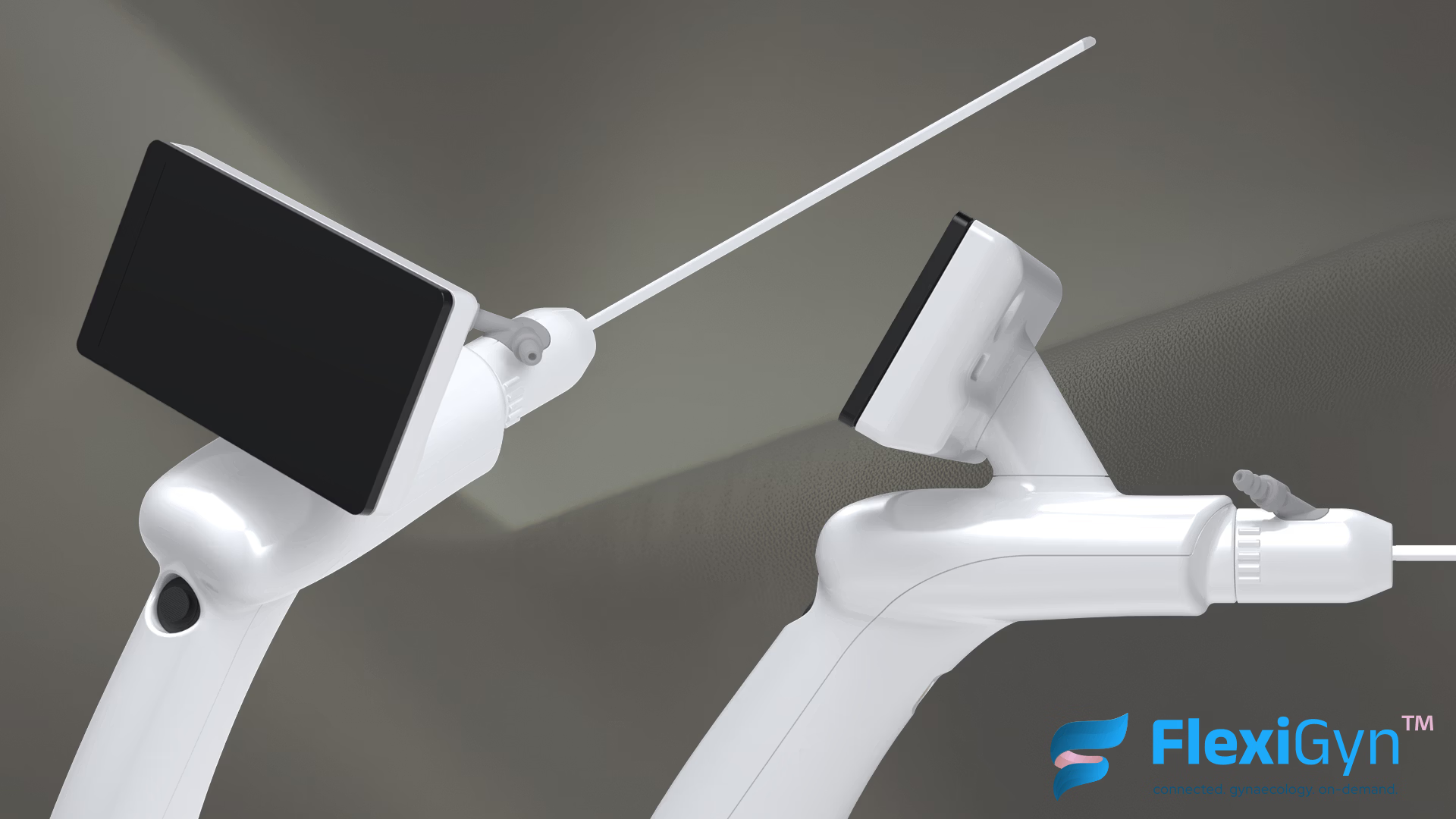
That is the pattern FlexiGyn is being designed around: appropriate care moving closer, while complex care stays where complexity belongs.
Pregnancy testing moved from laboratory bench to bathroom cabinet. Healthcare keeps repeating the journey.
Sources: RCOG, Outpatient Hysteroscopy, Green-top Guideline No. 59; BMJ, Outpatient versus inpatient uterine polyp treatment for abnormal uterine bleeding, 2015.